


Entry by: Ramon C. Tenoso, Playwright and artistic Director. PYUK.
The origins of JoMarZeb can be traced back to a simple desire: I wanted to write a ghost story, but not a frightening one. Instead, I imagined a comedy filled with humour, friendship, and a deeper message beneath the laughter. I settled on three mischievous ghosts who, in life and death, remained the best of friends. They had lived together, died together, and would now face eternity together. From the beginning, I envisioned a clear comedy, but one that would also explore themes of loyalty, memory, and human nature.
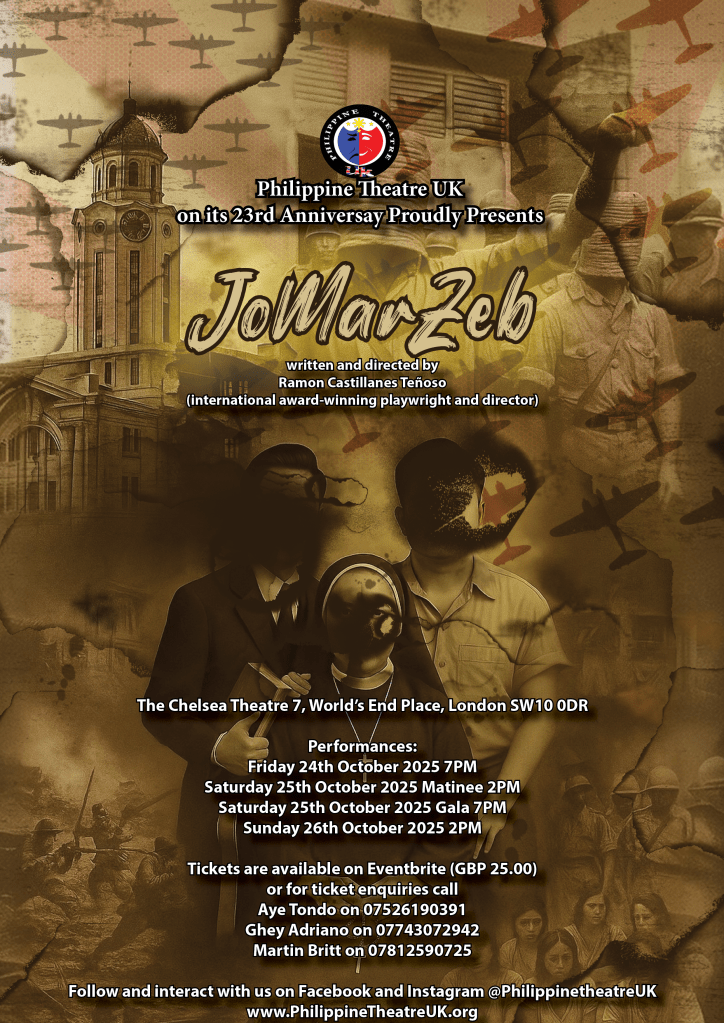
The development of the play was far from straightforward. It involved endless hours of writing, rewriting, discarding ideas, and then rewriting once again. The decision to set the story during the Second World War came about almost by accident. At first, I had no clear historical setting in mind. I simply imagined a fictional place called Saint Therese Convent. To my surprise, I later discovered that a convent of that name actually exists in Manila. That discovery proved transformative. Suddenly, the setting felt real, and ideas began to flow faster than I could capture them. I found myself constantly sifting through scenes, dialogue, and plot developments as the story gradually took shape.
As the characters developed, so too did their complexity. The nun, the teacher, and the lawyer—my three ghostly friends—acquired distinct personalities, rich senses of humour, and surprisingly profound reflections on existence. Their lives unfolded against the backdrop of a country first under American administration and later under Imperial Japanese occupation. The more I wrote, the more the story seemed to guide itself, as though an unseen hand was leading me forward. New themes emerged naturally: the role of the Church in society, betrayal by institutions, family treachery, and the corruption of local politicians. What began as a light-hearted ghost story gradually evolved into a powerful narrative layered with history, morality, and social commentary.
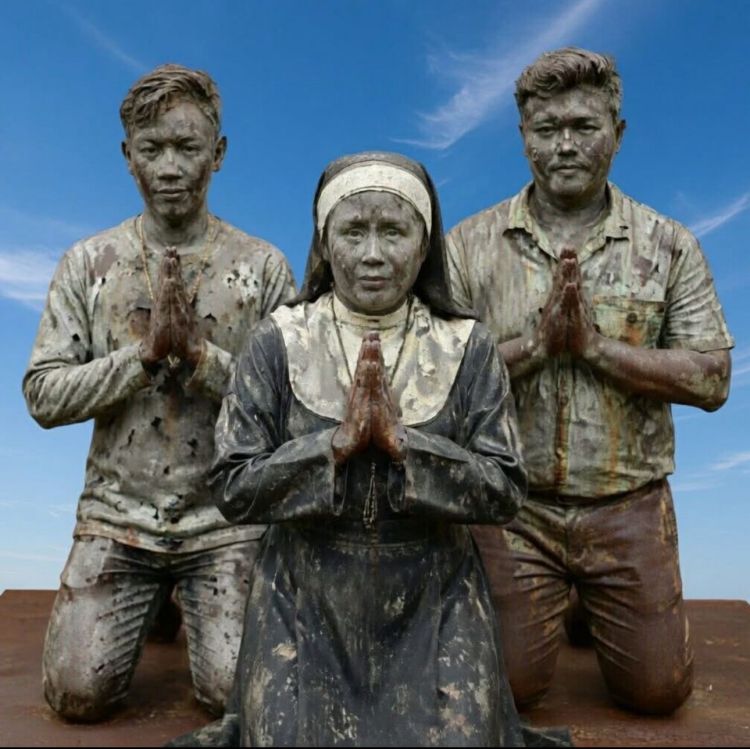
The final piece of the puzzle came with the connection to modern-day Oxford. Linking the past to the present allowed the story to explore how much the world has changed—and how much it has remained the same. I often imagined how shocked my three ghosts would be upon encountering the modern world after being dead for nearly eighty years. Their bewilderment at contemporary attitudes, technology, and social customs created some of the play’s funniest moments. In the end, JoMarZeb became far more than the ghost comedy I had originally intended. It grew into a story about friendship, memory, betrayal, faith, and the enduring ability of humour to bridge the gap between past and present. I as a playwright and creator lived with these ghosts for months and months. tbc.
 Philippine Theatre UK